more about Peak+
Explore blog topics about Peak+
Adiabatic Trim: The Cost of Taking a “Wait and See” Approach During Design
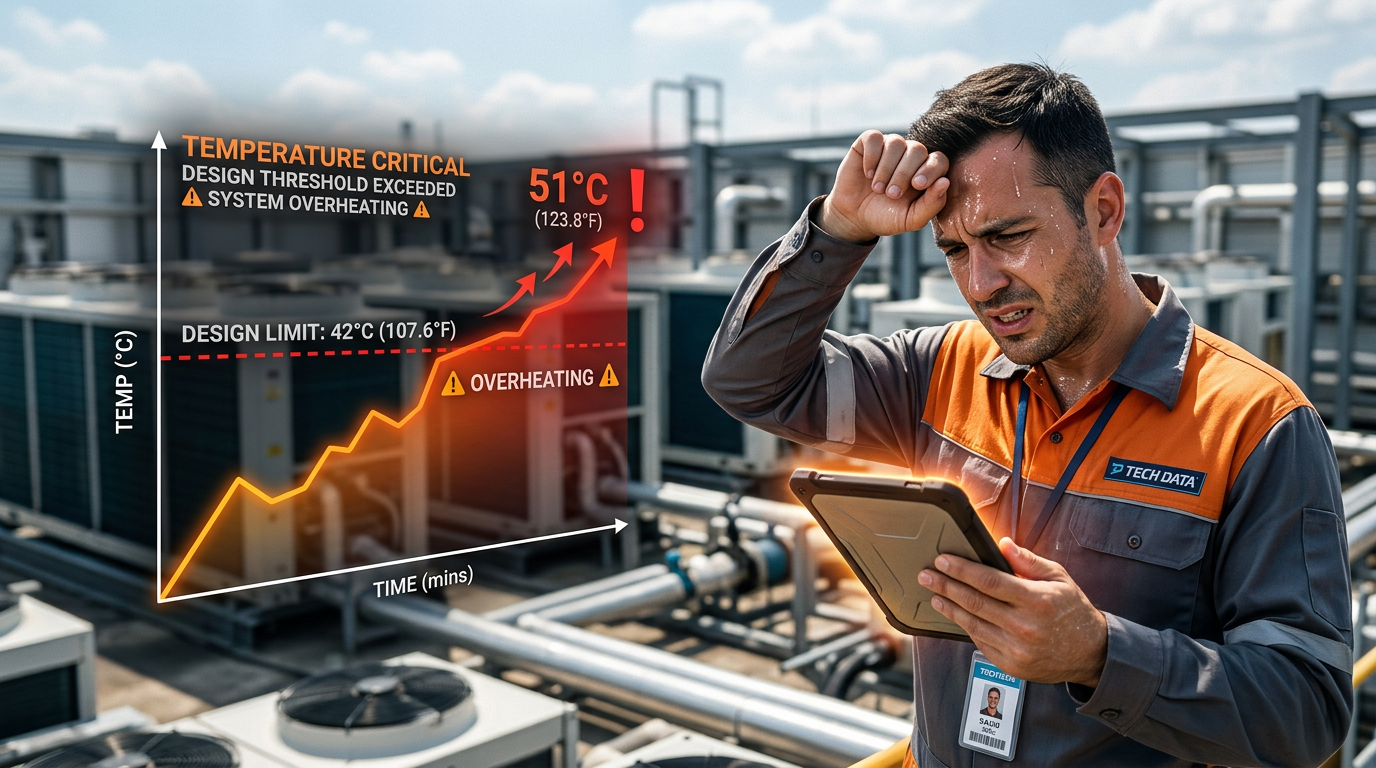
Adiabatic systems have been effective at rejecting heat for ages. This article focuses primarily on adiabatic pre-cooling systems, the precise tuning of those systems to reduce peak PUE and water usage, and the cost of delaying the decision to include adiabatic trim in the design.
CASE STUDY: 55MW Nevada Data Center
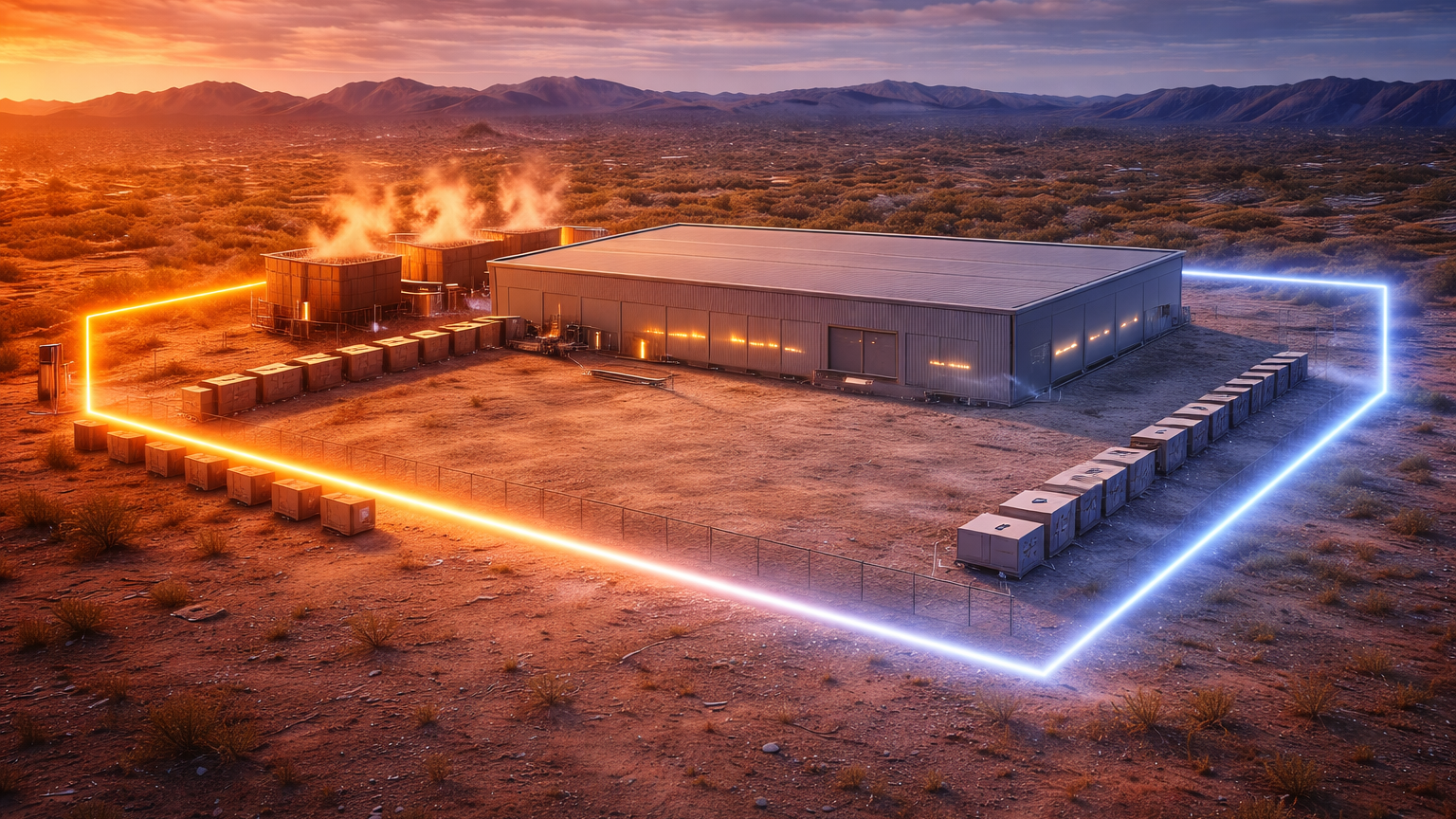
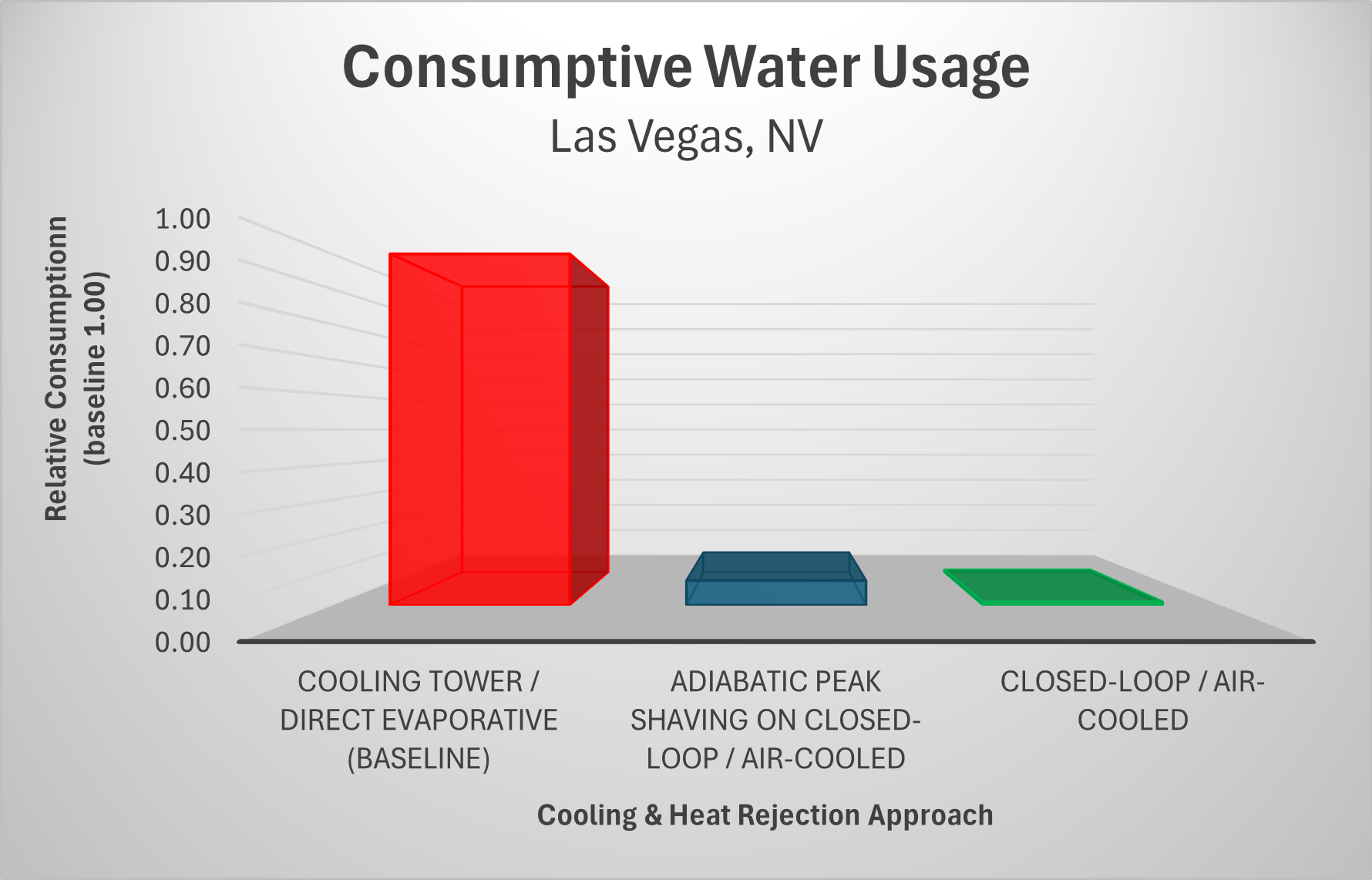
A confidential 55MW Network Access Point (NAP) data center in Nevada sought to eliminate 170 million gallons per year of cooling tower water consumption by converting from a water-cooled central plant to air-cooled chillers.
However, the site operates under a strict 65MW utility power allocation. A fully dry air-cooled design, sized for the N=20 design ambient condition of 116.7°F, would have exceeded the available utility capacity and rendered the project infeasible.
By incorporating Peak+ adiabatic assist technology to suppress condenser entering air temperature (CEAT) during peak conditions, the mechanical plant was redesigned, peak chiller demand was reduced by approximately 9MW, and the project was delivered within the existing utility allocation.
The result:
• 94% reduction in consumptive cooling water use
• Elimination of cooling towers
• Viable air-cooled conversion without additional utility infrastructure
• Improved peak plant performance within a fixed power envelope
Air Cooled vs Water Cooled: Demystifying Data Center Cooling Vernacular
In the data center industry, the phrases “air cooled” and “water cooled” are often used loosely — and without context, they can cause confusion. Do those terms refer to how the server racks are cooled inside the data hall? Or do they refer how the heat is rejected to the outside environment? This article provides clarity and explains why water usage shouldn’t a binary discussion.

Peak+ Data Center Site Performance
Peak+ deploys sensors to measure site performance as part of its core product package. Those sensors collect data on weather, temperature, unit status, and Peak+ performance at a unit level on every site. This data is available to all customers via our real-time dashboard and can also be integrated into customer BMS Systems.

Contextualizing Data Center Water Use
A 40 MW data center in Phoenix requires about 1.8 million gallons of water per year (~5.7 acre-feet) for adiabatic precooling to ensure the entering air temperature at an air-cooled chiller condenser inlet does not exceed 110°F. So how does this stack up against other water-intensive users in Arizona?


Enhanced Heat Rejection for High Density Data Center Design
Higher performance compute. Higher density server racks. Higher demand for power. Fueled by an AI arms race, the data center industry has reached dizzying new heights. The one thing that must remain low amidst all the highs? Temperatures. GPUs and CPUs need to be kept cool, obviously. What may be less obvious is the fact that outdoor condensing equipment also requires sufficient circulation of relatively cool air to reject heat from the building.

"What do backup generators, UPS systems, and Peak+ have in common?"
Analogous to generators and UPS systems, Peak+ technology can be used as an essential backup solution. Sophisticated data centers are proactively installing Peak+ technology to protect against problematic scenarios in external CFD models.