Unlock More IT Load From Air-Cooled Infrastructure
Adiabatic precooling that suppresses peak condenser temperatures—enabling more deployable capacity at design-day conditions.


Deployable IT Capacity
Data Points From Hundreds of Deployments
Years of Experience

Peak Temperature—not Average Conditions— Limits Your Site
At extreme ambient conditions, air-cooled systems lose capacity and consume more power.
These peak hours—not annual averages—define your deployable IT load.
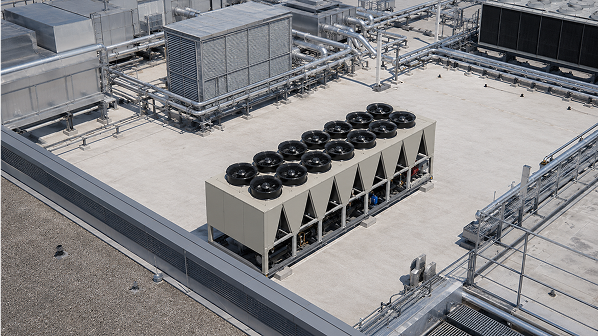

Stabilize Condenser Entering Air Temperature
Adiabatic precooling reduces entering air temperature during peak conditions—avoiding performance degradation and preserving capacity.


Convert Thermal Headroom Into Revenue
By suppressing peak temperature constraints, operators can deploy additional IT load without increasing electrical infrastructure.
25F suppressed peak air temp
10% PPUE improvement
+10% sellable IT yield
Precise control of condenser entering
air temperature

Real Results at Real Sites


Designed for Retrofit and New Construction

CASE STUDY: 55MW Nevada Data Center
Conversion from Water-Cooled Plant to Air-Cooled Chillers Within a Fixed 65MW Utility Allocation...

Peak+ Data Center Site Performance
Peak+ deploys sensors to measure site performance as part of its core product package...
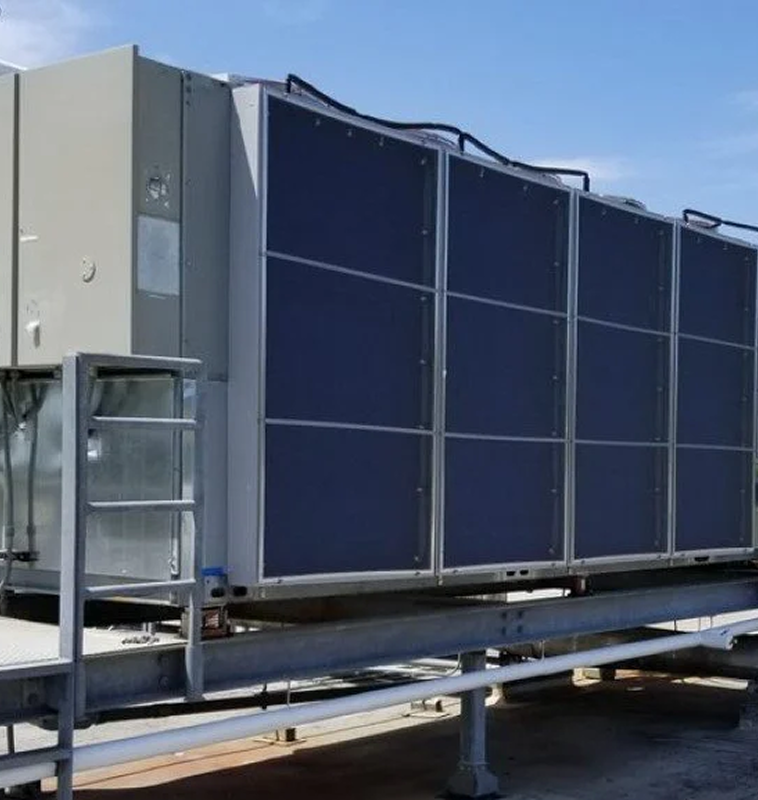
Private Data Center
The owner of a large data center facility with 3,310 Tons of air-cooled HVAC equipment had...
to
Peak Compressor Energy Reduction
to
Less Water than Flooded Media Alternatives
to
Increased Cooling Capacity
PPUE Reduction

Frequently Asked Questions
My data center project has a falling external CFD. Can Peak+ help address it?
Yes. This is a common use-case for Peak+ systems. Failing external CFDs from heat island and microclimate dynamics from hot air recirculation in dense chiller yards and hot exhaust air from nearby generators is increasingly a significant problem for data centers.
Our adiabatic pre-cooling systems have proven to be an effective approach to solving failing CFDS by enabling air-cooled chillers to operate at their design temperatures.
How can a Peak+ system help generate more revenue from the fixed power available at a data center?
Peak+ systems can meaningfully reduce a facilities' Peak PUE (PPUE), which typically occurs during the hottest times of the year. By precisely pre-cooling the condenser entering air temperature of air-cooled equipment, Peak+ reduces the power demand of that equipment, which frees up power to instead be used for incremental critical IT load. Since critical IT load power is the key determinant of a data center's potential revenue, precisely and reliably reducing PPUE can enable significant incremental revenue opportunities.
How can a Peak+ system reduce peak power demand? What are some of the benefits of peak-shaving?
Peak-shaving (reducing a facility’s peak total power demand) by using adiabatic precooling to reduce the power required by the compressors of air-cooled chillers is a common and compelling use-case of our systems. Peak facility power demand is driven by high ambient temperatures -- those hot days and weeks in the summer when the compressors on air conditioners and industrial chillers must work very hard to compress refrigerant so that heat can be rejected from the units' condenser coils. The higher the ambient air temperature reaching the condenser coils of an air-cooled chiller, the greater the power needed for the compressor, and the greater the strain on the power grid. It is common to see projects with projected condenser entering air temperatures above the cooling equipment’s design temperatures, which can cause significant derate of unit performance and capacity, and in some cases could result in chiller shutdown from excessive head pressures.
By pre-cooling the condenser entering air temperature with a Peak+ adiabatic precooling system, the air-cooled chiller’s compressor workload is reduced, which means power needed for cooling is reduced, which frees up power for other uses at the facility (such for incremental critical IT load at a data center).
Peak-shaving via Peak+ adiabatic cooling is a way to turn a previously unmanageable variable -- condenser entering air temperature -- into a manageable parameter. But precise control is essential.
In cases where a facility owner using Peak+ prefers to save on CAPEX rather than use the freed-up peak-shaved power for other uses, then the owner is able to pursue reduced CAPEX investment scenarios for the facility's primary and backup power infrastructure.
How does a Peak+ system help address derated performance of heat rejection and cooling equipment?
Cooling equipment performance derate can be a significant issue for design engineers, chiller OEMs, and project owners, especially for chiller yards with hot air recirculation that exceeds equipment design temperatures.
As condenser entering air temperature increases, chiller performance (such as kwh required per ton of cooling) and cooling capacity (tons) can degrade, especially when ambient temperatures exceed a chiller's design temperature.
Peak+ systems pre-cool and suppress the condenser entering air temperature, enabling the chiller equipment to perform as designed and avoid derated chiller performance.
See What Your Site Is Leaving on the Table
Request a Site Evaluation